


Understanding Darkling Beetles
Darkling beetles, also known as litter beetles, are common insects in poultry facilities. The combination of warmth, moisture and readily available food creates favorable conditions for beetle populations to grow rapidly. These insects can damage poultry house structures and insulation, disturb birds and negatively affect feed efficiency. Darkling beetles can also carry disease-causing pathogens, including Salmonella, fowl pox and botulism.
Managing darkling beetles requires an integrated approach. For organic poultry operations, non-chemical practices such as litter management and windrowing can be combined with approved OMRI Listed insecticide options to help manage darkling beetles.
Windrowing for Insect and Litter Management
Windrowing is the process of piling poultry litter into long rows between flocks to initiate composting. As organic material breaks down, microbial activity generates heat within the windrow. When sufficiently high temperatures are maintained, this heat can kill darkling beetles and their immature life stages, including larvae and pupae, helping reduce populations within the litter.
Heat can also influence darkling beetle behavior, driving mobile beetles away from the hotter interior and toward cooler areas or the surface of the windrow. Because darkling beetles can also harbor in cracks, crevices and structural areas outside the litter, windrowing alone may not address the entire population.
Beyond insect control, windrowing can help reduce pathogens, manage moisture and break down nitrogen compounds, which can improve litter conditions and air quality. Windrowing can also extend the usable life of litter, helping operations get more value from existing litter while reducing reliance on chemical insecticides.
Creating the Right Conditions for Windrowing
Successful windrowing depends on the right balance of temperature, moisture and oxygen. As microbial activity breaks down organic material within the litter, heat is generated inside the windrow. Maintaining an internal temperature of 130–150°F for 3–5 days helps create conditions that reduce insect populations and pathogen levels.
Moisture also plays an important role in the composting process. A target moisture content of 25–35% supports microbial activity, while litter that is too wet or too dry can interfere with proper heating. This moisture range also creates less favorable conditions for darkling beetle development, as beetles generally thrive in litter with higher moisture levels, closer to 50%. Adequate airflow is equally important, as oxygen supports the microbial activity needed to maintain the composting process.
How to Windrow Poultry Litter
- Prepare the House
• Remove birds, break up caked litter, and address leaks or areas with excess moisture. - Build the Windrows
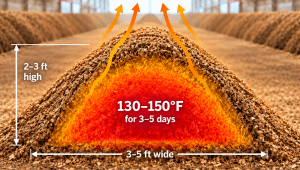
• Form litter into rows approximately 2–3 feet high and 3–5 feet wide, running the length of the house. Proper windrow size helps retain the heat needed for the composting process. - Retain Heat
• Close doors and curtains and reduce ventilation to help maintain heat and moisture. - Monitor Temperature
• Check internal temperature daily. The target is to reach at least 130°F within 24–48 hours. - Turn the Windrows
• After 3–5 days, turn or rebuild the rows to reintroduce oxygen and move litter through the heated portion of the windrow, promoting more uniform heating. - Spread the Litter
• After 7 days (or more) level the litter before chick placement and allow adequate time for cooling and drying.
Common Windrowing Mistakes
- Windrow is too wet ⇒ May prevent proper heating
- Windrow is too dry ⇒ Limits microbial activity
- Windrow is too small ⇒ Poor heat retention
- Too much ventilation ⇒ Heat loss
- Not turning the windrow ⇒ Incomplete treatment
Combining Windrowing with Insecticide Applications
As temperatures increase within the windrow, darkling beetles may move toward cooler areas to escape the heat. This movement can create opportunities to target beetles with insecticide treatments in areas where they become more active.
Application timing and placement are important considerations when combining windrowing with insecticides. Disturbing treated litter after an insecticide application can disrupt coverage and create untreated areas where beetles may avoid exposure.
Insecticides for Organic Poultry Production

Organic poultry operations have insecticide options available when additional darkling beetle control is needed. OMRI Listed products, such as Pyganic® Specialty and EverGreen® Pyrethrum Concentrate, contain naturally derived pyrethrins that provide rapid knockdown and kill adult darkling beetles by contact. Because these products do not provide residual control, thorough application coverage is important to reach beetles present at the time of treatment.
Both products are labeled for use in poultry facilities and can complement non-chemical practices such as windrowing and litter management. Insecticide selection and application should follow product label directions.
Building an Integrated Darkling Beetle Management Program
Effective darkling beetle management extends beyond a single treatment. Beetles can be found throughout poultry facilities, including litter, cracks and crevices, beneath feed and water lines and along wall and floor junctions. Monitoring these areas can help identify increasing populations and determine when additional control measures are needed.
For organic poultry operations, combining litter management, windrowing, sanitation and OMRI Listed insecticides provides multiple approaches to managing darkling beetle populations. Incorporating these practices into a comprehensive insect management program can help reduce beetle pressure, support bird health and profitability.
 Products
 Search